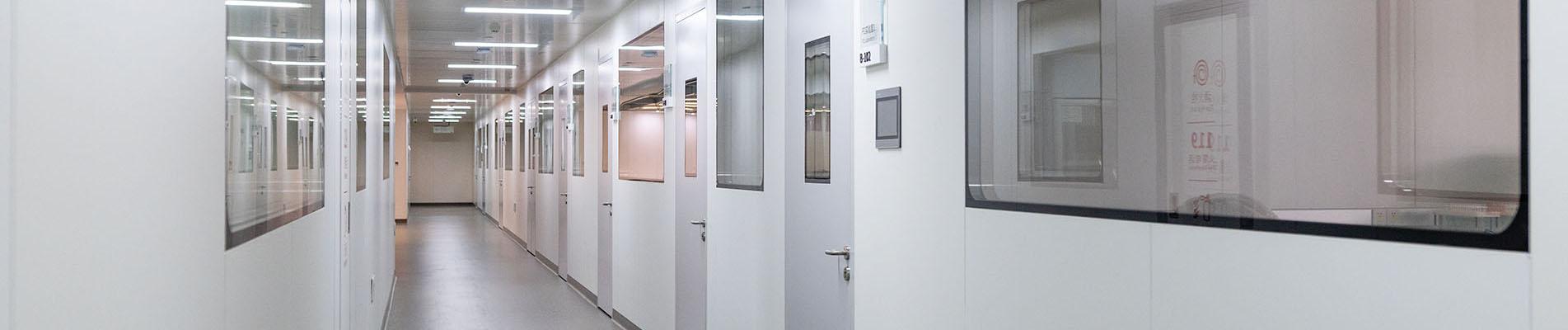
Q1: What is a stainless steel cleanroom panel?
A: It is a sandwich panel with stainless steel sheets on the surface and an insulated core material. It is designed for clean, hygienic, and corrosion-resistant environments.
Q2: Which stainless steel grades are available?
A: SUS304 is the most commonly used grade. SUS316L is available for environments requiring higher corrosion and chemical resistance.
Q3: What surface finishes are available?
A: Common options include 2B matte, No.4 brushed, and BA bright finishes.
Q4: What core materials can be used?
A: Available core materials include rock wool, magnesium-oxide rock wool, aluminum honeycomb, paper honeycomb, and polyurethane.
Q5: What is the standard panel thickness?
A: Standard thicknesses are 50 mm, 75 mm, and 100 mm. The 50 mm panel is widely used in cleanroom projects.
Q6: Is the panel fire-resistant?
A: Yes. Panels with rock wool or magnesium-oxide rock wool cores provide excellent fire resistance. The exact fire rating depends on the panel structure and certification.
Q7: Is it easy to clean and disinfect?
A: Yes. The smooth, non-porous stainless steel surface is easy to clean and suitable for frequent disinfection.
Q8: Where are stainless steel cleanroom panels commonly used?
A: They are widely used in pharmaceutical factories, laboratories, hospitals, food-processing facilities, electronics plants, and high-humidity clean areas.
Q9: Can the panel size be customized?
A: Yes. Panel thickness, width, length, stainless steel grade, surface finish, and core material can be customized.
Q10: What are the main advantages of stainless steel cleanroom panels?
A: Their main advantages include corrosion resistance, moisture resistance, durability, easy cleaning, hygienic performance, and an attractive appearance.
Q11: Can stainless steel be used on only one side?
A: Yes. The panel can be manufactured with stainless steel on one side and pre-painted galvanized steel on the other to meet different application and budget requirements.
Q12: How are the panels installed?
A: The panels use a modular connection system with aluminum profiles or concealed joints, providing a smooth surface and tight, hygienic connections.
MOTS CLÉS :
Mobile : +86 17715548238